





Open the average kitchen spice cabinet and you’ll find a museum: a jar of something from two moves ago, three kinds of curry powder nobody remembers buying, and a tin of paprika old enough to have lost its color and its courage. A griller’s spice rack is different. It’s a working shelf — a dozen jars, used hard and replaced often, that between them can season just about anything that fits on a grate. These are the twelve that earn their space at Joy of Grilling, and how each one behaves when the fire gets involved.
First, How Spices Act Over Fire
Three rules before the roll call. Ground spices burn. Their fine particles scorch over direct high heat, turning bitter — that’s why rubs go on before the cook but delicate blends finish better off the flame, and why a sugar-heavy rub wants indirect heat. Oil is the delivery truck. Most spice flavor compounds dissolve in fat, so a light coat of oil on the meat (or spices bloomed in butter for a baste) carries flavor further than dry spice on dry meat. Freshness is not a suggestion. Ground spices fade within months, not years. Buy small jars, keep them away from the stove’s heat and steam, and if a spice doesn’t smell like anything when you open it, it won’t taste like anything either.
The Twelve
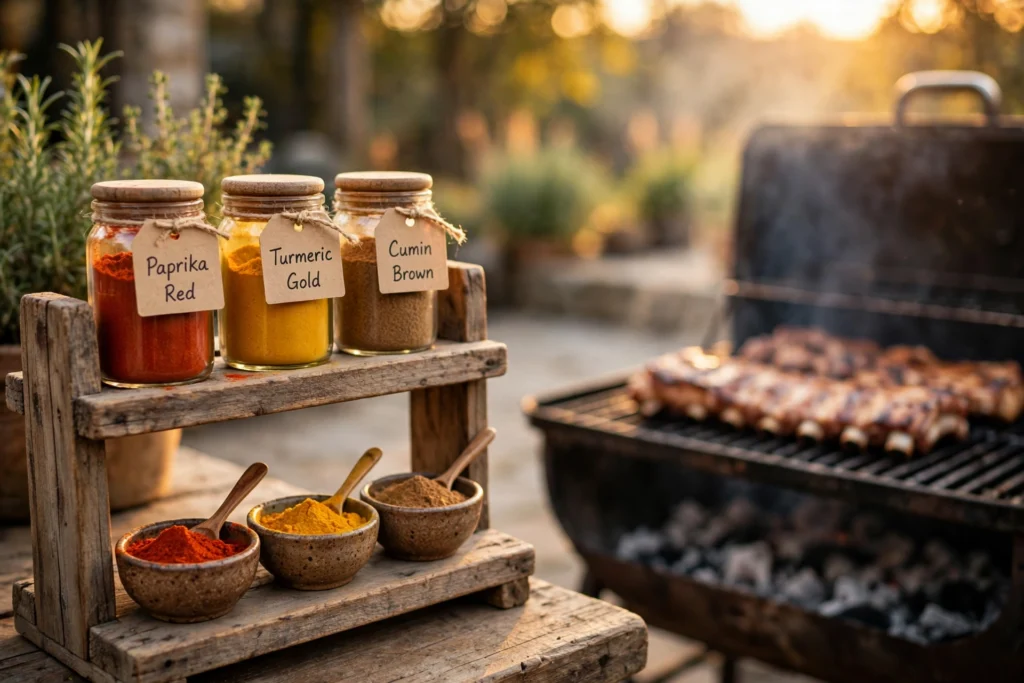
Smoked Paprika. The shortcut to smoke flavor when the cook is fast — dried peppers smoked over oak before grinding. Sweet, deep, brick red. Best on chicken, pork, and potatoes. It’s the backbone of more great rubs than any spice on this shelf, and it burns eagerly, so it shines in indirect cooking and on skin that will crisp rather than char.
Chili Powder. Not a single spice but a blend — ground chiles with cumin, garlic, and oregano already in the mix (read the label; that’s what it is). Best on beef, chili, and anything headed for a tortilla. Because it’s a blend, it layers under your own rub rather than replacing it.
Cumin. Warm, earthy, unmistakable. Ground from seed, and noticeably better if you toast the seeds and grind them yourself when a recipe matters. Best on beef, lamb, and pork. A little reads as depth; a lot reads as taco night — know which one you’re cooking.
Garlic Powder. The rub-maker’s workhorse, and not interchangeable with fresh garlic: it distributes evenly, never burns into bitter bits the way fresh garlic does on a grate, and lays down the savory base every rub stands on. Best on everything. Granulated garlic powder coats most evenly.
Onion Powder. Garlic powder’s quieter partner — sweet, mellow, and the reason a rub tastes rounded instead of sharp. Best in rubs and on burgers, where it melts right into the crust.
Black Pepper. Buy it whole and grind it coarse for the grill. Fine pepper disappears; coarse-cracked pepper builds bark — it’s half the famous Texas brisket rub all by itself (salt being the other half). Best on beef and pork, applied with confidence.
Cayenne Pepper. The heat dial. Pure ground chile heat without much flavor of its own, which is exactly its job: it lets you raise the temperature of a rub without changing its character. Start at a quarter teaspoon per batch of rub and walk it up.
Ground Coriander. The seed of the cilantro plant, but it tastes nothing like the leaf — it’s citrusy, warm, and gentle. The quiet secret in a lot of sausage seasoning and a wonderful partner to pork and chicken. If a rub tastes mysteriously “bright,” coriander is usually why.
Mustard Powder. Sharp and tangy dry, mellowing as it cooks. It’s the tang in Carolina-style rubs and the reason some barbecue sauces have that pleasant back-of-the-tongue bite. Best on pork. Mix it into rubs dry; its heat only wakes up with moisture.
Cinnamon. Use a whisper. In tiny amounts it adds the warmth people can’t name in Kansas City-style rubs and on sweet potatoes; in big amounts it turns dinner into dessert. Best as a background note, never the headline.
Turmeric. Earthy, golden, and generous with color — it’s what makes mustard-based sauces and a lot of grilled chicken glow. Best in marinades and sauces, where its raw edge cooks out. It stains everything it touches, including your hands and your good towel. Ask us how we know.
Dried Oregano. The Mediterranean entry — peppery and robust, and one of the few dried herbs that honestly beats fresh for grilling, because drying concentrates it. Best on lamb, chicken, and anything Greek-inspired. Crush it between your palms over the meat to wake it up.
The Second Shelf
Once the twelve are working, these earn a look: celery seed (the quiet note in slaw dressings and some famous rubs), chipotle powder (smoke and real heat in one jar), ground ginger (for island and Asian marinades), allspice (the soul of jerk seasoning), and bay leaf — which no griller grinds into a rub, but which perfumes brines, marinades, and a pot of beans like nothing else on earth. One leaf, whole, fished out before serving. Some spices are soloists and some are seasoning for the pot, and knowing the difference is most of the craft.
Where They All Come Together
Here’s the part worth remembering: a dry rub is just this shelf, measured. Every rub in our Rubs collection is built from these twelve jars and their second-shelf friends — paprika and pepper for the base, garlic and onion for the body, cayenne for the dial, and one or two character spices to point it somewhere. Stock the shelf, keep it fresh, and you’re never more than a mixing bowl away from a rub of your own. That’s what a spice rack is for.
Next time you’re at the store, do the smell test on your own cabinet when you get home. If the paprika smells like dust, replace it first — your next rack of ribs will tell the difference.