





Every grilling argument ever settled — and a few friendships saved — came down to one small tool: a thermometer. Color lies, the poke test lies, and “it looks done” has ended more dinners than rain. Temperature is the one witness that never guesses. This is the chart we cook by at Joy of Grilling: the safe temperatures from the USDA, the doneness temperatures the steak houses use, and how to take a reading you can trust.
The Safe Temperatures (USDA)
These are the minimum internal temperatures from the USDA’s Food Safety and Inspection Service, measured with a food thermometer in the thickest part of the food. They are the floor, not the ceiling — nobody’s favorite steak lives at the floor, and we’ll get to that next.
| Food | Minimum Temperature | Rest Time |
|---|---|---|
| Beef, pork, lamb & veal — steaks, chops, and roasts | 145°F | At least 3 minutes |
| Ground meats (beef, pork, lamb, veal) | 160°F | — |
| Ground poultry | 165°F | — |
| All poultry — whole, pieces, and breasts | 165°F | — |
| Fish and seafood | 145°F, until flesh is opaque and flakes easily | — |
| Ham, fresh or smoked (uncooked) | 145°F | At least 3 minutes |
| Ham, fully cooked (to reheat) | 140°F | — |
| Egg dishes | 160°F | — |
| Leftovers and casseroles (reheating) | 165°F | — |
Why the rest? Resting isn’t just about juices. For whole cuts of beef, pork, and lamb, the USDA builds the rest right into the recommendation — the temperature holds or climbs a few degrees while the meat sits, and that time at temperature is part of what makes it safe. Tent loosely with foil and give big roasts longer; a brisket or a pork shoulder may rest half an hour or more and be better for it.
Steak Doneness Temperatures
Here’s the honest part every chart owes you: the USDA recommends 145°F with a rest for steaks, which lands at medium. Most steak lovers order below that, and grill masters have cooked to these doneness temperatures for generations. We print both so the choice is yours, with your eyes open. Pull the steak off the grill about 5°F before your target — it will coast up while it rests.
| Doneness | Pull Temperature | What It Looks Like |
|---|---|---|
| Rare | 120–125°F | Cool red center |
| Medium rare | 130–135°F | Warm red center |
| Medium | 135–145°F | Warm pink center |
| Medium well | 145–155°F | Slightly pink center |
| Well done | 155–165°F | Little to no pink |
Burgers are a different story from steaks. Grinding moves surface bacteria through the whole patty, so there’s no medium-rare shortcut we can stand behind: ground beef cooks to 160°F, every time. Save the pink for whole cuts.
How to Take a Temperature You Can Trust
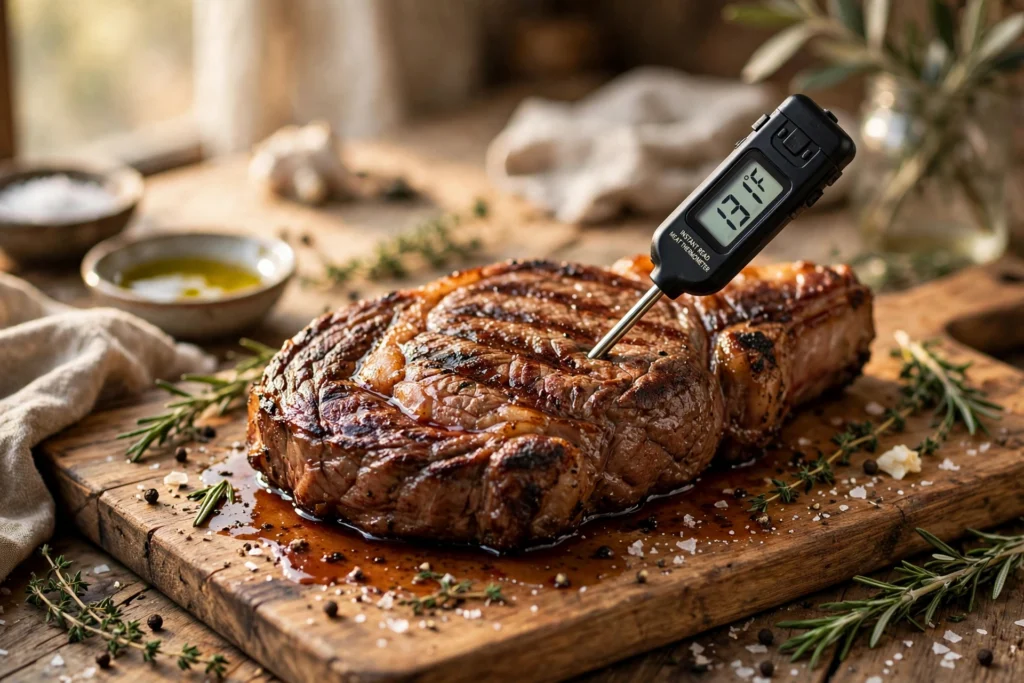
Go in from the side. On steaks and chops, slide the probe in sideways so the tip lands in the center of the thickest part. From the top, it’s easy to punch through and read the hot grate air underneath.
Mind the bone. A probe touching bone reads high. Fat pockets read low. Aim for the center of the meat itself, and on big cuts, check in two spots.
Poultry gets two readings. The innermost thigh and the thickest part of the breast — both should read 165°F, and the thigh probe shouldn’t touch the bone.
Thin food, angled probe. Burgers, fish fillets, and chicken cutlets: insert the probe at an angle or from the side so enough of the tip is buried to read the meat, not the pan.
Rest, then confirm. Carryover cooking raises the temperature after the food leaves the heat — a few degrees on a steak, ten or more on a large roast. That’s why the charts say “pull at” instead of “serve at.” Give it the rest, and if you’re unsure, take one last reading before the knife comes out.
Choosing a Thermometer
An instant-read thermometer is the single best money a griller can spend — it ends arguments and saves expensive meat. A leave-in probe thermometer earns its keep on long smokes, where opening the lid to check costs you heat and time. Dial thermometers work, but they’re slower and harder to read at a glance over a hot grate. Whichever you choose, keep it clean, keep it handy, and use it every cook until the readings become second nature. (Our Accessories guides walk through the tools we reach for, thermometer included.)
Questions Everybody Asks
Is pink pork safe? Yes — at 145°F with a 3-minute rest, pork can come off the grill blushing slightly pink and be both safe and juicy. The old “cook pork till it’s white and dry” rule belonged to a different era’s temperature (160°F) and the USDA lowered the recommendation in 2011.
Can chicken ever be pink at 165°F? It can look it, especially near the bone in smoked or young birds — color is not the test. If the thermometer reads 165°F in the thigh and the breast, the chicken is done, pink tinge or not.
Why does my steak keep overshooting? Usually it’s pulled too late and rested too hot. Come off 5°F early, rest it uncovered or loosely tented (a tight foil wrap keeps cooking it hard), and remember that a ripping-hot cast iron finish adds degrees fast.
Does the temperature change at altitude or on different grills? The safe temperatures don’t change — 165°F is 165°F anywhere. What changes is how fast you get there. Trust the probe, not the clock, and you’ll never be fooled.
How do I know my thermometer is honest? The ice-water test: stir it into a glass of crushed ice and water. It should read 32°F. Many instant-reads can be recalibrated; check the maker’s instructions if yours is off.
Temperatures on this page follow USDA Food Safety and Inspection Service guidance. When in doubt, cook it a little longer — but with a thermometer on your side, you won’t have to guess.