






Korean , Cabbage , ginger , garlic
Best for: The anchor of the Korean table — make it once, eat it for weeks.
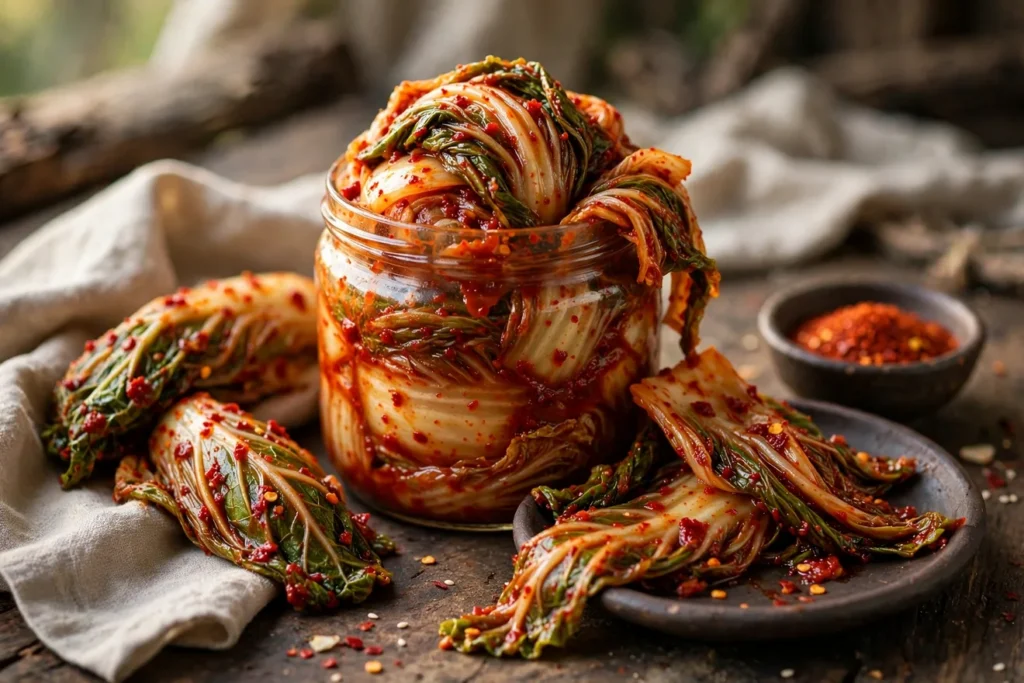
Baechu kimchi is not a grilled dish, and this collection is honest about that: it is a ferment, made ahead on the counter and in the refrigerator. But no Korean grill night exists without it — kimchi is the table staple that every grilled dish in this collection pairs with, cutting richness, adding heat, and finishing nearly every ssam wrap.
Grill: None — this is a fermented staple, made ahead, not grilled. Equipment: Large mixing bowl, colander, saucepan, disposable gloves, 2-quart glass jar or airtight container.
Ingredients
No cooking Brine: 2 hours. Ferment: 24 hours. Total: 26 hours 40 minutes.
Cabbage and brine
- 1 large napa cabbage, about 3 lb
- 1/2 cup fine table salt
- Water, to cover
Kimchi paste
- 1 cup water
- 2 tablespoons sweet rice flour (chapssalgaru)
- 1 tablespoon sugar
- 3/4 cup gochugaru (Korean red pepper flakes), plus more to taste
- 1/4 cup fish sauce
- 8 garlic cloves, minced (about 1/4 cup)
- 1 tablespoon grated fresh ginger
- 1 small onion, grated
- 2 tablespoons salted shrimp (saeujeot), minced (optional)
Vegetables
- 1 cup julienned daikon radish
- 4 scallions, cut into 1-inch pieces
- 1/2 cup julienned carrot (optional)
Directions
Quarter the cabbage lengthwise and cut it into 2-inch pieces. Toss with the salt and enough water to cover in a large bowl and let it brine for 2 hours, turning a few times, until the thick white stems bend without snapping.
Rinse the cabbage three times in fresh water, drain in a colander for 20 minutes, and squeeze out excess water. It should taste pleasantly salty, not harsh.
For the paste base, whisk the water and sweet rice flour in a small saucepan, simmer for 2–3 minutes into a thin porridge, stir in the sugar, and let it cool completely.
Stir the gochugaru, fish sauce, garlic, ginger, onion, and salted shrimp (if using) into the cooled porridge. Fold in the daikon, scallions, and carrot.
Wearing gloves, work the paste between the cabbage leaves and over every piece until all of it is coated deep red.
Pack the kimchi tightly into the jar, pressing down to submerge it in its own juices and leaving 1 inch of headspace. Ferment at room temperature for 24 hours, then refrigerate. It is good after 2–3 days and keeps improving for 2–3 weeks.
Grilling tip: Taste the paste before it goes on the cabbage — once fermented, the salt and heat are set, so adjust the gochugaru now.