






In Argentina, the asado is not a meal you squeeze into a day — it’s the day itself. One person, the asador, builds a wood fire, lets it fall to coals, and runs the parrilla (the grill) for hours while everyone else gathers, talks, and eats in waves. When the big cuts finally come off, tradition calls for a round of applause for the asador. It is earned.
The cooking is simple on purpose: good meat, coarse salt, patience, and smoke. But the order matters — an asado unfolds in courses, from the first sausages to the last sweet bite. This is our whole Argentine shelf, all thirty recipes, arranged the way an asado actually happens. A few of them never touch the grill — the salads and sweets — and they’re here because the asado table isn’t complete without them.
The First Wave
The achuras open the show. Before any steak appears, the grill gives up its small treasures: Chinchulines, crisped chitterlings; Mollejas, grilled sweetbreads squeezed with lemon; and Morcilla, rich blood sausage. Alongside them, Provoleta — a thick wheel of provolone grilled until crisp outside and molten within — and the mighty Choripán, a grilled chorizo sandwich with chimichurri that is half the reason people arrive on time. Empanadas de Carne, kissed by the fire, round out the first pass.
The Big Cuts
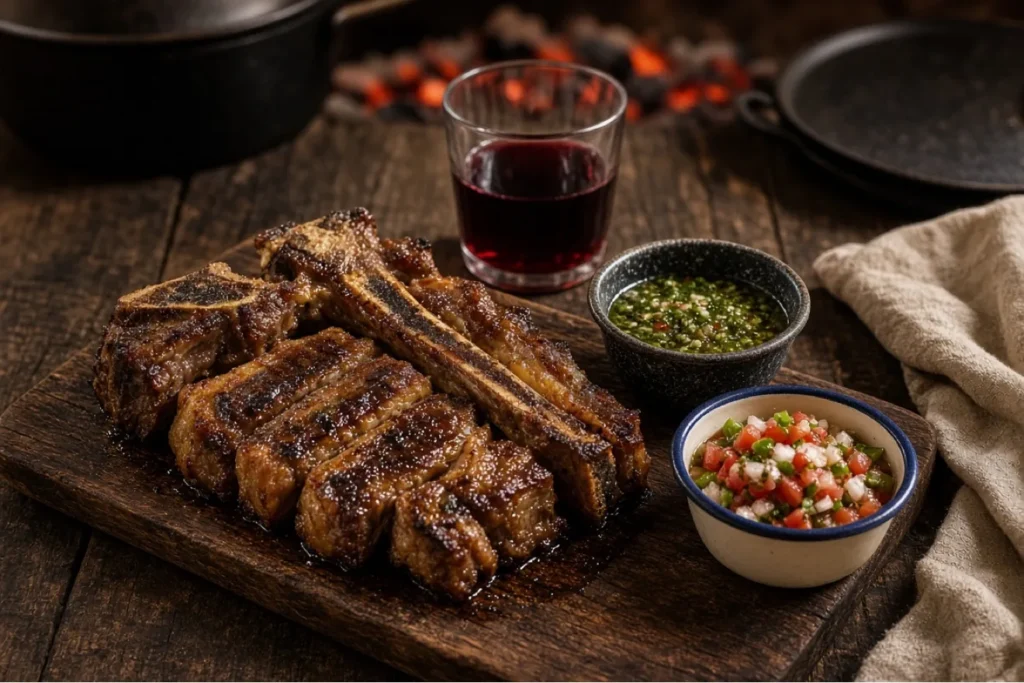
The signature cut. Tira de Asado — beef short ribs cut across the bone into a long, meaty strip — is the cut the whole event is named around. It cooks slow over gentle coals until the fat renders and the edges caramelize.
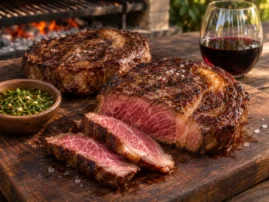
The steaks. Vacío, the juicy flank, and Entraña, the intensely beefy skirt steak, are the asador’s pride. Then come the steakhouse cuts with Argentine names: Bife de Chorizo, the strip steak (no sausage involved — the name nods to its shape), Ojo de Bife, the ribeye, and Lomo, the tenderloin.
Matambre, pork, chicken, and lamb. Matambre — the thin flank cut whose name means “hunger killer” — comes two ways: Matambre a la Pizza, topped like a pizza straight on the grill, and Matambre Arrollado, rolled and stuffed. Pork brings Bondiola, the marbled shoulder, and Costillas de Cerdo, grilled pork ribs. A whole Pollo a la Parrilla and Patagonian-style Cordero — grilled lamb — make sure the parrilla feeds everyone at the table.
The Sauces and the Brine
Two sauces, one brine. Chimichurri Clásico — parsley, garlic, oregano, oil, and vinegar — goes on nearly everything and is not negotiable. Salsa Criolla, a fresh relish of onion, pepper, and tomato, brings the brightness. And behind it all is Salmuera, the asador’s salt brine, brushed over the big cuts as they grill — the quiet seasoning trick of the whole tradition.
The Table
What fills the rest of the plate. Morrones Asados con Huevo — peppers roasted in the coals with an egg cracked inside — are pure asado theater. Papas Rústicas, rustic grilled potatoes, and Calabaza Asada, grilled squash wedges, come off the parrilla, while Berenjenas, grilled eggplant with garlic and parsley, keeps the vegetarians close to the fire. The Ensalada Mixta — lettuce, tomato, and onion — is the one fresh, sharp thing every asado plate needs.
Something Sweet
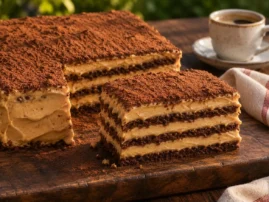
Dulce de leche runs the ending. It starts with the Postre Vigilante — cheese with quince and sweet potato paste — named, legend says, for the Buenos Aires policemen who ordered it in diners. Then the beloved Chocotorta, the no-bake chocolate and dulce de leche cake of a thousand birthdays; Alfajores de Maicena, tender cornstarch cookies sandwiched with dulce de leche; and Panqueques con Dulce de Leche, warm crepes rolled around more of the good stuff.
Big cuts over real coals reward a thermometer, so keep our Grilling Temperatures & Doneness Chart nearby. Browse the full shelf in the Argentine recipes, or see where the tour goes next on Around the World. Un aplauso para el asador — applause for the cook.