






Best for: A slow Sunday cookout where the fire starts at breakfast, the ribs ride beside it all afternoon, and nobody is in a hurry for anything.
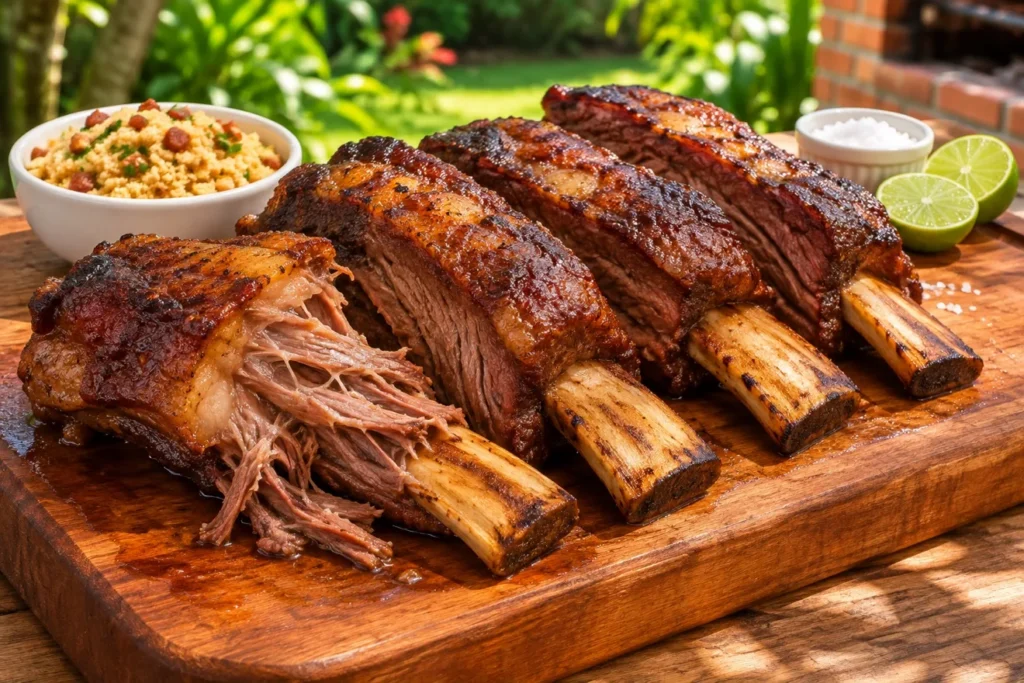
Costela gaúcha is the slow heart of southern Brazilian barbecue — big beef ribs seasoned with little more than coarse salt and cooked for hours beside the fire, not over it, until the meat pulls easily from the bone. In Rio Grande do Sul the ribs traditionally roast on skewers stuck in the ground around an open fire; a covered grill run low and indirect is the backyard version of the same patience. The reward is bark, smoke, and meat that slices like butter.
Grill: Indirect, low heat (about 250°F) beside charcoal, lid on, for hours. Equipment: Covered charcoal grill or smoker, heavy foil, instant-read thermometer or probe. Course: Main dish.
Ingredients
Rest: 20 minutes. Total: 7 hours 40 minutes to 8 hours 40 minutes.
Not sure when it’s done? Check the grilling temperatures & doneness chart.
- 5 to 6 pounds beef plate ribs (one 3-bone rack) or bone-in beef short ribs
- 3 tablespoons coarse sea salt (sal grosso)
- 1 tablespoon coarsely ground black pepper
- 2 teaspoons garlic powder (optional)
- 1 cup beef broth or water, for spritzing and the wrap (optional)
Directions
Trim and salt the ribs. Pull the papery membrane from the bone side if it comes away easily, and trim only hard, thick fat. Season all over with the coarse salt, pepper, and garlic powder if using, and let the rack sit while the fire settles — an hour in the fridge, uncovered, deepens the seasoning.
Build a low, indirect fire. Bank the charcoal to one side of a covered grill and bring the temperature to about 250°F. Add a chunk of hardwood if you like; costela wants gentle smoke, not a campfire.
Set the ribs beside the heat. Lay the rack bone-side down on the cool side of the grate, thickest end toward the coals, and close the lid. From here the rule is simple: low heat, lid down, and time.
Cook low and turn rarely. Roast 6 to 7 hours, turning the rack once or twice and spritzing with broth or water if the surface looks dry. The bark should set deep and dark, and the meat should begin pulling back from the ends of the bones. This is the long pole of the churrasco — plan the fire for the whole day, because costela is done when it is done.
Wrap for the tender finish. For the last 45 minutes to an hour, wrap the rack tightly in foil with a splash of broth — the costela no bafo finish — and return it to the indirect side. The ribs are done by tenderness, not temperature: a probe should slide between the bones with almost no resistance, and the rack should bend easily when lifted from one end.
Rest, then slice between the bones. Rest the wrapped rack 20 minutes. Unwrap, set it on a board, and slice down between the bones into single-rib portions. Serve with farofa and vinagrete and let the table do the rest.
Grilling tip: Ribs lie about doneness if you only watch the clock. Trust the probe test — when it glides in like the meat is warm butter, the costela is ready, whether that takes seven hours or eight.