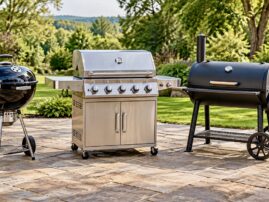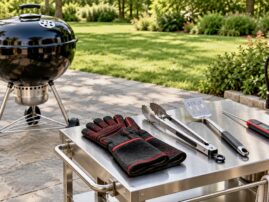







A kettle, a ring of fuel, and one lit end — the snake method turns an ordinary charcoal grill into an all-day smoker. This guide teaches the classic charcoal snake, then the all-wood variation one of our favorite TikTok pitmasters runs.
In this guide: What the snake method is · What you need · Build the classic snake · Light it and set the vents · Run the cook · The all-wood snake · Troubleshooting · What to cook first
What the snake method is
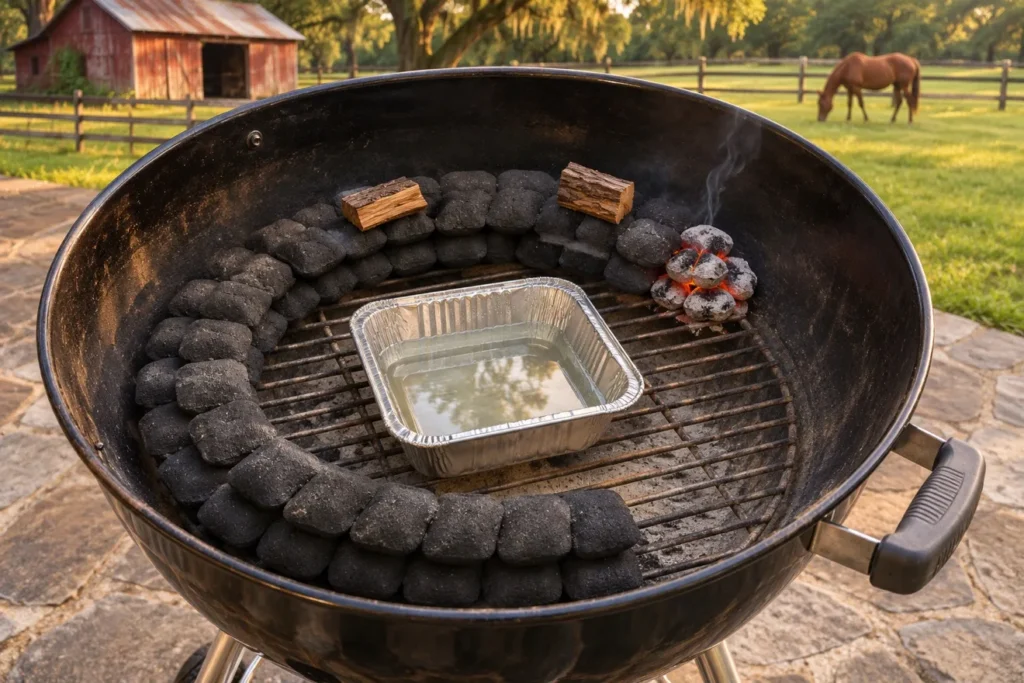
Line your fuel in a neat ring around the inside rim of a kettle grill, light only one end, and the fire creeps slowly around the ring like a fuse — a few briquettes at a time, for hours. That slow burn is the whole trick: instead of a pile of charcoal that roars hot and dies in an hour, the snake holds a kettle right in the smoking zone, roughly 225–275°F, for 8 to 10 hours or more. No smoker required, no gadgets, no refueling. If you own a kettle, you already own a smoker. You just have to lay the fuse.
What you need
- A kettle grill (22-inch is the standard this guide is written for)
- Charcoal briquettes — about 80–100 for a full snake (briquettes, not lump; their uniform shape is what makes the fuse burn evenly)
- 3–4 fist-size wood chunks (oak, hickory, or fruitwood)
- A foil pan and hot water, for the center of the grill
- A chimney starter
- A grill thermometer — the lid gauge lies; trust a probe at grate level
- Heat-proof gloves
Build the classic snake
Ring the rim. Along the inside wall of the kettle, stand briquettes in two neat rows, two wide and two tall, leaning against the bowl. Run the ring about three-quarters of the way around, leaving a gap at the end so the fire can’t complete the circle and meet itself.
Lay the wood early. Set your wood chunks on top of the snake along its first half. Meat takes on smoke best while it’s cold and the cook is young; chunks near the end of the ring mostly go to waste.
Set the water pan. Put the foil pan in the open center and fill it with hot water. It steadies the temperature, adds moisture, and catches drips.
Light it and set the vents
Light the head only. In the chimney, light just 8–12 briquettes until they’re ash-gray, then pile them at the head of the snake with tongs. That’s your fuse’s match — resist lighting more; a snake lit in the middle is just a campfire.
Start the vents here. Bottom vent about a quarter open, top vent about half open, with the top vent positioned over the food so the smoke draws across it on its way out. Give the kettle 20–30 minutes to settle, then adjust the top vent in small moves, waiting 10–15 minutes between changes. Every kettle and every day’s weather runs a little different — these are starting points, not commandments.
Run the cook
Keep the food ahead of the fire. Set the meat over the water pan, away from the lit section. As the burn travels around the ring over the hours, rotate the cooking grate (gloves on) so the lit coals stay away from the food — or simply turn the meat itself now and then.
Then leave it alone. The snake’s bargain is patience: every peek costs heat and time. Trust the thermometer, tend the vents in small moves, and let the fuse do its work. When the burn reaches the end of the ring, the cook is done — or you can bridge fresh briquettes onto the tail and keep going.
The all-wood snake — Grand Prix BBQ’s variation
Here’s where it gets interesting. The TikTok pitmaster behind Grand Prix BBQ (@grandprixbbq) runs his kettle snake with no charcoal at all — small splits of red oak laid end to end in the same ring, lit at one end the same way. Full credit to him for the idea; you can watch his red oak snake video right here. This is our written guide to his variation.
How to run it. Choose splits about wrist-thick and 8–12 inches long, and lay them in a snug single ring around the rim, ends touching — gaps are where the fuse dies. Light a small pile of kindling and oak pieces at the head, let it establish, then set the vents a little tighter than the charcoal snake to start.
Know what you’re trading. Wood is not a polite fuel. An all-wood snake burns hotter than charcoal — expect it to want to run 275–325°F unless you choke the vents down — and it burns faster per foot of ring, so the cook is shorter and the fire wants watching and adjusting. What you get in return is flavor: real wood smoke, all the way through, the way an offset smoker tastes. Run the charcoal snake until it’s boring. Then run this one when you’re ready to drive.
Troubleshooting
Running hot. Close the top vent a notch and wait a full 15 minutes before touching anything else. Heat in a kettle changes slowly; chasing it cooks nothing but your patience.
Running cold. Open the vents a notch. If that doesn’t answer, check the head of the snake — ash can smother the burn. Nudge the ash off the lit coals gently.
The snake went out. It happens at a gap. Bridge the gap with a few lit briquettes from the chimney and carry on. Your dinner does not care about your dignity.
What to cook first
A pork butt is the snake’s best friend — forgiving, inexpensive, and built for exactly this fire. Start with our Classic Smoked Boston Butt or the Carolina-Style Pulled Pork, keep an eye on internal temperatures with our grilling temperatures chart, and if the kettle starts feeling small for your ambitions, our first smoker guide is the honest next step.
Sources: Grand Prix BBQ, “All wood red oak snake method,” TikTok (linked above). Standard snake-method practice as taught across the kettle-grilling community; temperatures and vent settings are starting points to be tuned to your grill.